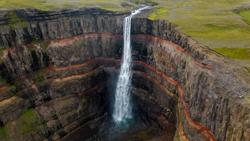
Middle School: Geologic History of Earth Vocabulary Game
Students play a game using new vocabulary as they study clues left in Earth’s crust. This Bite Sized Science Moment takes about 5–15 minutes and can be used within a Science block or at any time. It is designed to be flexibly implemented in your day!
By Amplify Classroom
Grades: 6th - 8th Grade
Subject: Science
Learning goals: Today's Goals • Define and practice using terms used in geologic history lessons. • Language Goal: Students will read vocabulary terms and discuss definitions as well as examples with their group. (Reading, Speaking, and Listening) Prep Checklist • Put students into groups of 4–5. • Click "Present" when you are ready to start the lesson. Lesson Preview • Students will take turns spinning the spinner. • Students will then do what is required based on the color the spinner lands on: define it, act it out, provide an example, or make a rhyme. Vocabulary Terms and Definitions absolute age: the age of something in years continental drift: the movement of Earth's tectonic plates over long periods of time fossil: remains or impressions of a once-living organism formed in rock fossil record: the sequence of preserved once-living organisms in chronologic order in rock layers geology: the study of Earth's history based on it's physical structures and how those structures have changed overtime Pangea: the supercontinent that was once all of today's continents touching in a single large landmass relative age: the age of something in comparison to something else rock layers: compacted sediments formed over long periods of time creating horizontal layers subduction: the movement of one tectonic plate moving down below the edge of another tectonic plate superposition: the placement of one thing on top of another, the most recent object being highest and the oldest being lowest in order tectonic plates: sections of Earth's crust that are not connected, but instead move on top of the molten rock below it